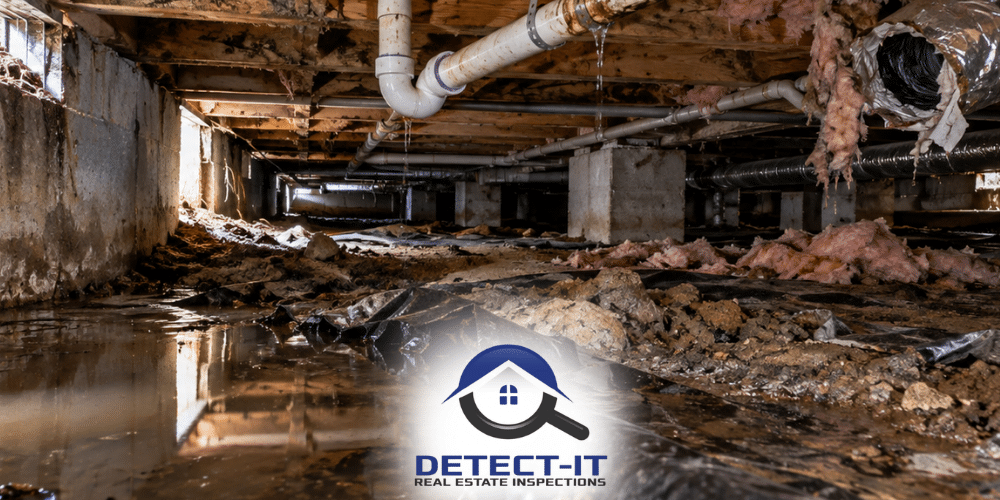
The crawl space is the part of a Northwest Arkansas home that almost nobody looks at and almost everything depends on. The water lines run through it. On many homes the ductwork runs through it. The floor you walk on sits on top of it. And when the first hard freeze arrives, it is usually the first place in the house where something goes wrong.
Plenty of homes across Fayetteville, Lowell, Springdale and the rest of Washington and Benton County sit on crawl space foundations — especially older homes and houses built on sloped Ozark lots. Whether you are buying one this fall or already own one, November is the right month to find out what is going on down there, while it is still a maintenance question rather than a burst pipe.
Here is what a crawl space inspection covers, what the findings mean, and what to do before the cold sets in.
Why Does the Crawl Space Matter More in Winter?
Because a vented crawl space is, in practical terms, outdoor air with a house on top of it. In summer that air is humid. In winter it is cold, and anything in the space that carries water or conditioned air is exposed to it.
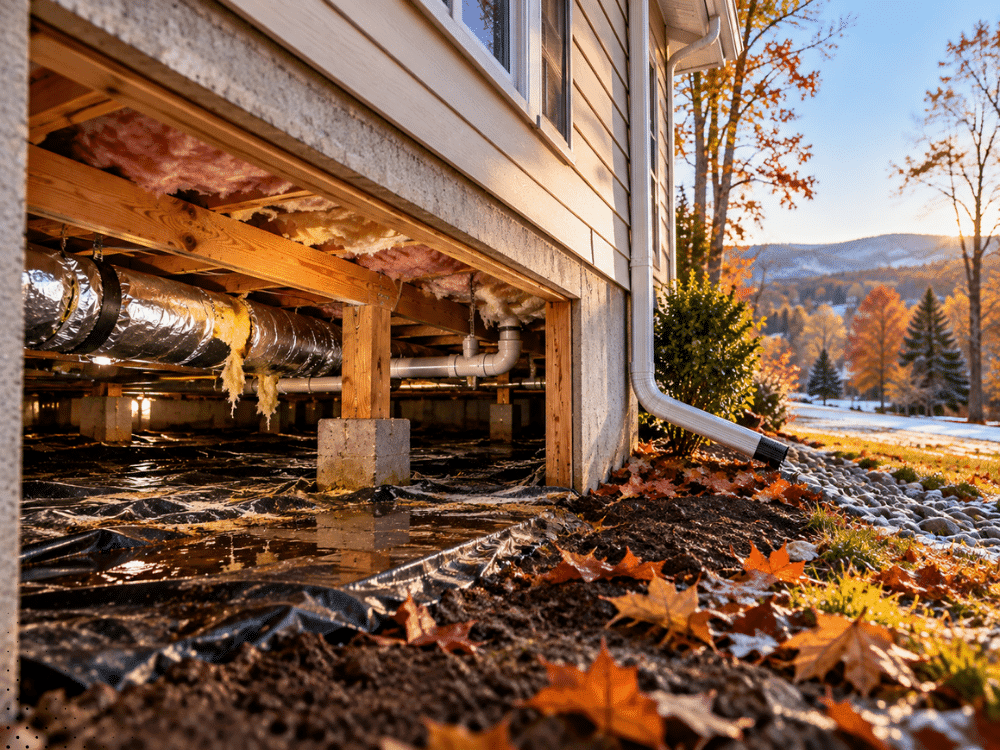
Three things happen when the temperature drops. Supply lines that are poorly insulated, or not insulated at all, become the most freeze-vulnerable plumbing in the house. Ductwork that is disconnected, crushed or uninsulated loses heat into the crawl space before it ever reaches a room, which is why some Northwest Arkansas homes have floors that stay cold no matter where the thermostat is set. And winter rain on clay soil and sloped lots finds its way under the house if the drainage outside is not doing its job.
None of that is visible from the living room. It is visible from the crawl space.
What Does a Home Inspector Check in the Crawl Space?
When the crawl space is accessible and safe to enter, Brian Yarbrough at Detect-It Real Estate Inspections goes in. Where it is not — a clearance too low to enter, standing water, an unsafe condition — the report says so and documents what could be seen from the access opening. Either way, you know exactly what was and was not evaluated.
Moisture and standing water
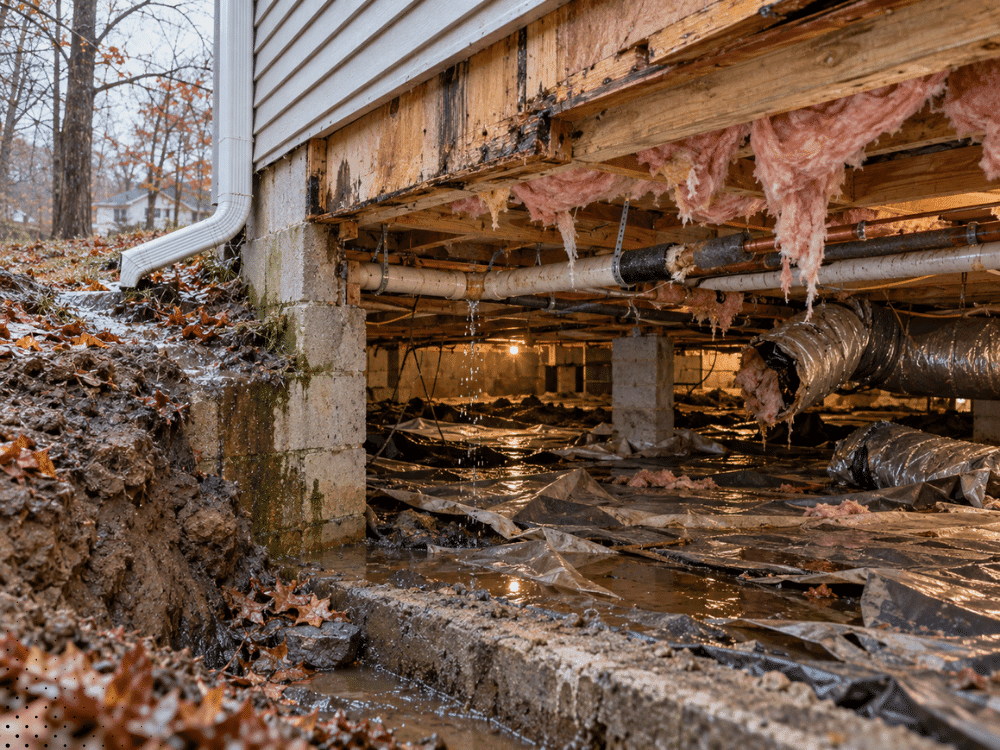
Standing water, damp soil, water staining on the foundation walls and efflorescence (the white mineral deposit water leaves behind on masonry) all point to water entering the space. On Ozark terrain that usually traces back outside: grading that falls toward the house, downspouts discharging at the foundation, or an uphill slope sending runoff straight under the home. Finding the cause matters more than finding the puddle.
The vapor barrier
The plastic sheeting over the soil is there to keep ground moisture out of the space. The inspection looks at whether one is present, whether it covers the ground, and whether it has been torn, displaced or left bunched up by the last person who crawled through. A vapor barrier with large gaps is only doing part of its job.
Floor framing and foundation
Joists, beams, the band joist, piers and posts are checked for visible damage: rot, staining, sagging, cracked or shifted supports, notched or cut framing from past plumbing and HVAC work, and makeshift supports such as stacked blocks or a jack post left in place. Evidence of wood-destroying insects is noted where it is visible.
Plumbing and freeze protection
Supply and drain lines are traced where they are visible, with attention to active leaks, old stains beneath fixtures, pipe insulation that is missing or has fallen, and patched sections of line that suggest an earlier freeze repair. Drain lines are checked for sags and for leaks at joints, which often show up as damp soil or staining directly below a bathroom or kitchen.
Ductwork, insulation and other systems
Ducts that have come apart at a joint, collapsed, or lost their insulation are common crawl space findings, and they waste heat every day the furnace or heat pump runs. The inspection also notes floor insulation that has fallen out from between the joists, dryer exhaust that terminates in the crawl space instead of outdoors, and visible electrical concerns such as open splices outside a junction box.
Pests and entry points
Rodent activity, nesting in insulation, and gaps at vents and the access door are noted, because a crawl space that animals can enter is also one that loses heat and gains moisture.
Should You Close the Crawl Space Vents in Winter?
It depends on the crawl space, which is why it is a question for an inspection rather than a rule of thumb.
Closing foundation vents during the coldest months can reduce the cold air reaching your plumbing. But in a crawl space with standing water, a failed vapor barrier or poor drainage, closing the vents can also trap moisture. The sensible order is to deal with ground moisture and drainage first, protect the pipes with proper insulation, and then decide what to do with the vents.
Some homeowners go further and have the crawl space encapsulated — sealed, lined and conditioned. It can be a good solution in the right house, but it is a significant project with its own design requirements, and a crawl space specialist is the right person to design it. The inspection report gives that conversation a factual starting point.
What Should Fayetteville and Lowell Homeowners Do Before the First Freeze?
A short list covers most of it:
Find your main water shutoff and make sure it turns. If a line splits under the house, that valve is the difference between a repair and a flooded floor system.
Look at the pipe insulation on any supply line you can see from the access opening, especially near foundation vents and exterior walls.
Disconnect garden hoses from exterior faucets so the bib can drain.
Close the crawl space access door and make sure it actually seals. A missing or broken access cover lets cold air straight in beside the plumbing.
Walk the outside after a rain. Watch where the downspouts discharge and where water collects. Anything pooling against the foundation is heading under the house.
If you have not looked under your house in years — or ever — a crawl space finding is far cheaper to address in November than in January.
For homeowners preparing to sell, a pre-listing inspection in Fayetteville, AR can help document accessible crawl space conditions and other property findings before putting the home on the market.
What If You Are Buying a Home With a Crawl Space This Fall?
Then the crawl space deserves as much attention in your inspection report as the roof and the HVAC system. Not every finding is serious. A torn section of vapor barrier or a few fallen batts of insulation are routine maintenance items. Standing water, active leaks, damaged framing, disconnected ductwork and signs of wood-destroying insects are the findings that carry real cost and belong in your repair negotiations.
Read the photographs, not just the summary. The crawl space is the one part of the house you are unlikely to see for yourself before closing, so the report is your only look at it. Ask your inspector to walk you through what the photos show and which items are routine and which are not.
A buyer home inspection in Fayetteville, AR provides a broader evaluation of accessible home systems and components, including the crawl space, to help buyers understand property conditions before closing.
One more item worth raising: radon. Soil gas enters through the ground, and crawl space floors and foundation openings are among the pathways. Testing is a separate service from the home inspection, it takes days rather than hours, and closed-house winter conditions suit the test — so if you want it, order it the day you schedule the inspection.
For newly built homes, a new home warranty inspection in Fayetteville, AR can also help homeowners document accessible crawl space and other home conditions before their builder warranty expires.
Q&A: What Northwest Arkansas Homeowners Ask About Crawl Spaces
Does a standard home inspection include the crawl space?
Yes. The crawl space is part of the structure and systems a home inspection evaluates. When it is accessible and safe to enter, the inspector goes in. When it is not, the report states the limitation and documents what could be seen from the access opening.
What are the most common crawl space problems in Northwest Arkansas homes?
Moisture and drainage-related findings are the most frequent, which fits the region’s sloped lots and clay soils. Displaced or torn vapor barriers, fallen floor insulation, disconnected or uninsulated ductwork and poorly protected plumbing are also common. The cause of any water under the house is usually found outside, in the grading and downspouts.
How do I keep pipes in my crawl space from freezing?
Insulate exposed supply lines, keep the crawl space access door closed and sealed, fix gaps where cold air enters, and disconnect garden hoses from exterior faucets. Know where your main water shutoff is before the first freeze. If a section of pipe has frozen before, it is worth having it evaluated rather than hoping it holds.
Is standing water in a crawl space a deal breaker?
Not automatically. It is a finding that needs a cause and a solution. Often the source is outside — grading, gutters or downspouts — and correcting it is manageable. Ongoing water with damaged framing or mold growth is a more significant problem and should be evaluated by the appropriate specialist during your inspection period.
Should I get my crawl space encapsulated?
It can be a good investment in the right house, but it is a design project, not a quick fix. Moisture sources and drainage should be addressed first. A crawl space specialist can advise whether encapsulation fits your home, and an inspection report gives that discussion a factual starting point.
What areas does Detect-It Real Estate Inspections serve?
Detect-It serves Northwest Arkansas from its Lowell base — Fayetteville, Springdale, Rogers, Bentonville, Bella Vista, Centerton and the surrounding Benton and Washington County communities. Call to confirm availability for your property address.
Schedule a Crawl Space Inspection Before Winter in Northwest Arkansas
Cold temperatures, moisture buildup, exposed plumbing, and damaged insulation can create problems beneath your home. A professional home inspection can help identify visible crawl space concerns before winter weather arrives.
At Detect-It Real Estate Inspections, Brian Yarbrough helps homeowners and buyers in Fayetteville, Lowell, Springdale, Rogers, Bentonville, and surrounding Northwest Arkansas communities better understand their property’s condition through detailed inspections and documented findings.
Whether you’re preparing for winter or purchasing a home with a crawl space, understanding potential issues can help you plan your next steps.
Don’t wait until freezing temperatures reveal hidden problems beneath your home.
Call 479-551-8040 or Schedule Your Home Inspection with Detect-It Real Estate Inspections today.