PUBLISH DATE: October 1, 2026
Northwest Arkansas gets talked about as a new-construction market, and in much of Benton County that is fair. But Rogers, Springdale, Lowell, and Fayetteville also carry decades of established housing — mid-century ranches, 1970s and 80s subdivisions, and older stock near the historic downtowns — and those homes are frequently the better value on a price-per-square-foot basis.
They also carry a completely different inspection profile than a three-year-old house in a new subdivision. A buyer who walks into an older Rogers or Springdale home with new-construction expectations is going to read the report wrong: alarmed at things that are normal for the age, and relaxed about things that genuinely matter.
Here is what actually deserves your attention during an older home inspection in Rogers or Springdale, AR, and why fall is a useful time to be looking.
Why Does Fall Change What an Older Home Inspection Can Show You?
Because several things only become visible at this point in the year.
The heating system has been sitting idle since spring. In October, it gets tested for the first time in months, which is exactly when problems surface — and much better to find them now than on the first genuinely cold morning in Washington County, when every HVAC company in the region is triaging emergencies.
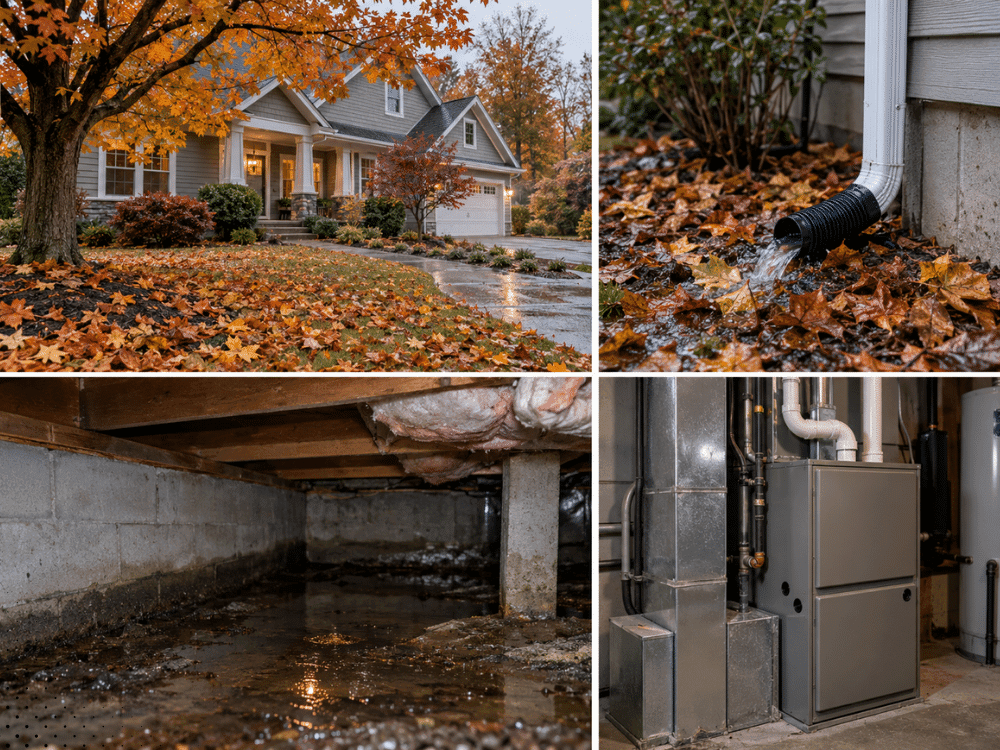
The tree canopy is dropping, which makes the drainage story readable. Where leaves collect, where water pools, and which gutters are already failing — all of it is visible now in a way it is not in July.
And the summer’s work on the house is fresh. Attic heat damage, sun-degraded exterior sealant and roofing, and any moisture that got in during a wet spring have all had a full season to show themselves.
What Should a Home Inspection Cover Most Carefully on an Older Northwest Arkansas Home?
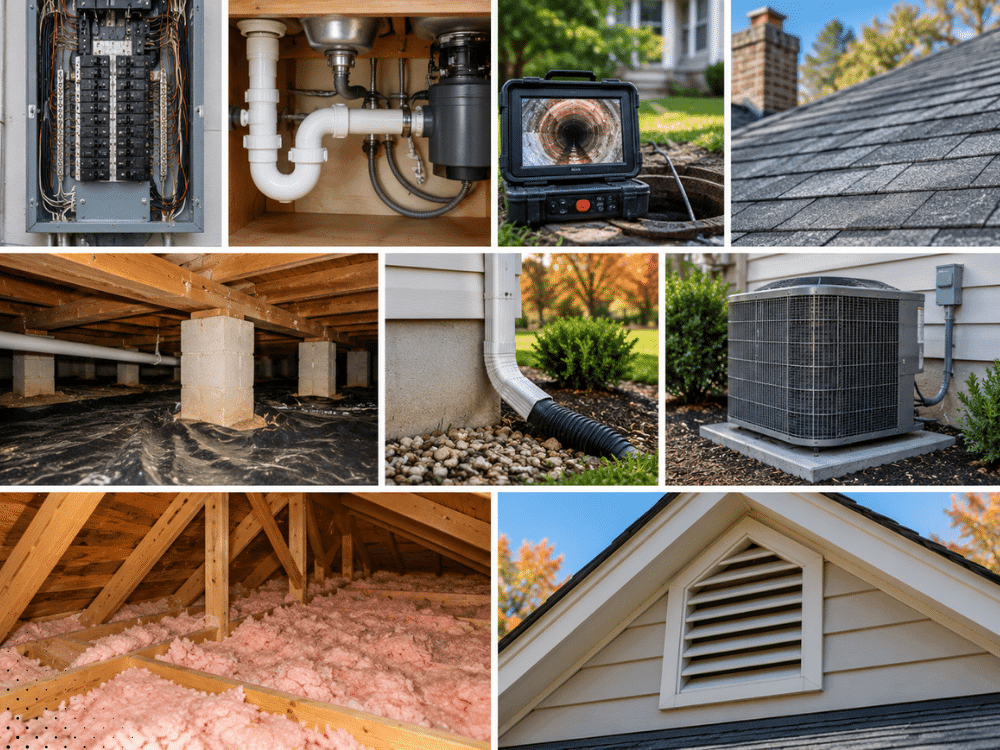
An older home inspection in Northwest Arkansas should pay close attention to the home’s electrical system, plumbing materials and drain lines, roof condition, crawl space, foundation and drainage, HVAC system, insulation, and ventilation.
The Electrical System
This is where age matters most, and where the consequences reach beyond the repair cost.
On homes from the 1960s and earlier, expect scrutiny of service size, grounding, and the panel itself. Certain older panel brands and configurations are known concerns and can affect a buyer’s insurance and financing — not just their repair list. Aluminum branch wiring, used in some homes built in the mid-1960s to mid-1970s, needs specific attention and specific remediation methods.
A home inspector reports what is visible and operable. If something in the panel or wiring warrants it, the right next step is a licensed electrician’s evaluation before you close, not after.
Plumbing Materials and the Drain Lines You Cannot See
Older homes in Northwest Arkansas can carry older supply piping — galvanized steel in the oldest stock, and polybutylene in certain late-70s through mid-90s builds. Both have known issues, and both matter to a buyer.
The drains matter just as much and are harder to assess. On an older home, a sewer scope is worth serious consideration. It is the only way to see the condition of the line between the house and the main, and a failed or root-intruded lateral is one of the most expensive surprises a buyer can inherit.
A sewer scope is a separate service from a standard home inspection.
The Roof and Its Repair History
Northwest Arkansas gets real hail and real ice. Most older roofs here have been through at least one claim, and the workmanship varies.
Inspectors regularly find mismatched shingles, poorly sealed penetrations, hardened vent boot collars, and flashing at roof-to-wall transitions that was never done properly. Under a mature canopy, add wet leaf litter held in valleys, which shortens roof life measurably.
Crawl Spaces, Foundations, and Drainage on Ozark Terrain
Lots throughout Northwest Arkansas are cut into slopes, and water moves fast downhill.
Grading falling toward the foundation, downspouts discharging at the wall, erosion beside the house, and retaining walls leaning or bulging are recurring findings — and they drive nearly every moisture problem in the region.
In the crawl space itself, look for standing water, a torn or displaced vapor barrier, insulation fallen from the joists, and elevated framing moisture.
HVAC Age and Ductwork
An older home often has an HVAC system added long after the house was built, sometimes with ductwork routed through an unconditioned attic or crawl space.
Separated joints, crushed flex duct, undersized returns, and a unit near the end of its service life are all common — and all worth knowing before you own them.
Insulation and Ventilation
Older Northwest Arkansas homes are frequently underinsulated, particularly at the eaves, and their attic ventilation is frequently blocked.
That combination drives high utility bills, ice damming in a hard winter, and a shortened roof deck life. It is also one of the more cost-effective things a new owner can improve.
Should Buyers Test for Radon in Rogers or Springdale?
Radon testing is worth considering, and fall is the right season for it.
Northwest Arkansas sits on Ozark Plateau geology associated with radon production, and levels vary dramatically house to house regardless of age or condition. Radon has no smell, color, or taste, and no visual home inspection can detect it. It requires a measurement device left in place under closed-house conditions, which is far more natural once heating season starts.
The EPA recommends action at 4.0 pCi/L or above. Testing is a separate service from the home inspection, and it takes days rather than hours, so order it early in your inspection period.
What Is Normal for an Older Home Versus What Actually Matters?
This is the distinction that saves buyers from bad decisions in both directions.
Some things are simply age. Settlement cracking that has been stable for decades, cosmetic wear, dated finishes, or a floor that is not perfectly level in a seventy-year-old house — these are not defects, and treating them as deal-breakers means passing on sound homes.
What genuinely matters is different: active water intrusion, electrical safety issues, structural movement that is ongoing rather than historic, a heat source that is unsafe, and anything that affects insurability.
A good home inspection report distinguishes these clearly rather than presenting a flat list where a cracked outlet cover sits next to a double-tapped breaker.
Ask your inspector to be explicit about severity. That single conversation is worth more than any other part of the process for a buyer who has not owned an older home before.
What Does a Home Inspection in Northwest Arkansas Actually Cover?
A home inspection in Northwest Arkansas is a visual and operational evaluation of the accessible systems of the home — structure, roofing, exterior, interior, electrical, plumbing, HVAC, insulation, and ventilation — reporting what is present and how it performs on the day of the inspection.
It is not destructive testing, it does not open walls, and it is not a code compliance inspection.
InterNACHI’s Standards of Practice describe the scope inspectors work to, and Arkansas registers home inspectors through the Arkansas Home Inspector Registration Board.
Sewer scope, radon testing, and septic evaluation are separate services worth discussing when you schedule your buyer home inspection.
Q&A: What Northwest Arkansas Buyers Ask About Older Homes
Are older homes in Rogers and Springdale a bad buy?
No. They are frequently a better value per square foot, often on larger lots in established neighborhoods.
They simply require a different reading of the inspection report and a buyer who understands what is normal age versus what is a defect.
What is the most expensive surprise on an older Northwest Arkansas home?
Typically, a failed sewer lateral or a significant water intrusion problem that has been running for years.
Both are largely preventable surprises — a sewer scope addresses the first, and a careful look at grading, gutters, and the crawl space addresses the second.
Should I get a sewer scope when buying an older home?
On an older home, it is worth serious consideration.
A sewer scope is the only way to assess the line between the house and the main, and root intrusion and failed sections are common in older neighborhoods. It is a separate service from the standard home inspection.
Do I need an electrician if the home inspector flags the electrical panel?
If the report recommends it, yes, and before closing rather than after.
A home inspector reports what is visible and operable; a licensed electrician evaluates and corrects. Panel issues can affect insurance, so this is not a finding to defer.
Should I test for radon in Rogers or Springdale?
Testing is the only way to know. Levels vary house to house, and fall and winter give more reliable readings because closed-house conditions are natural.
Order radon testing early in your inspection period since results take days.
What areas does Detect-It Real Estate Inspections serve?
Detect-It serves Northwest Arkansas from its Lowell base — Rogers, Springdale, Fayetteville, Bentonville, Bella Vista, Centerton, and the surrounding Benton and Washington County communities.
Call to confirm availability for your property address.
How long does an older home inspection take?
Roughly two and a half to four hours on a typical home, and often longer on older properties with more systems, additions, and outbuildings.
The report includes photographs, condition notes, and repair recommendations.
Schedule an Older Home Inspection in Northwest Arkansas
An older Northwest Arkansas home can be an excellent buy — provided you know which findings are age and which are the ones that cost money.
Schedule your inspection with Detect-It Real Estate Inspections, call Brian at (479) 551-8040, and ask about sewer scope and radon when you book so everything runs in one visit.
Want to know what a full inspection includes before you schedule? Explore Detect-It Real Estate Inspections’ home inspection services in Northwest Arkansas.